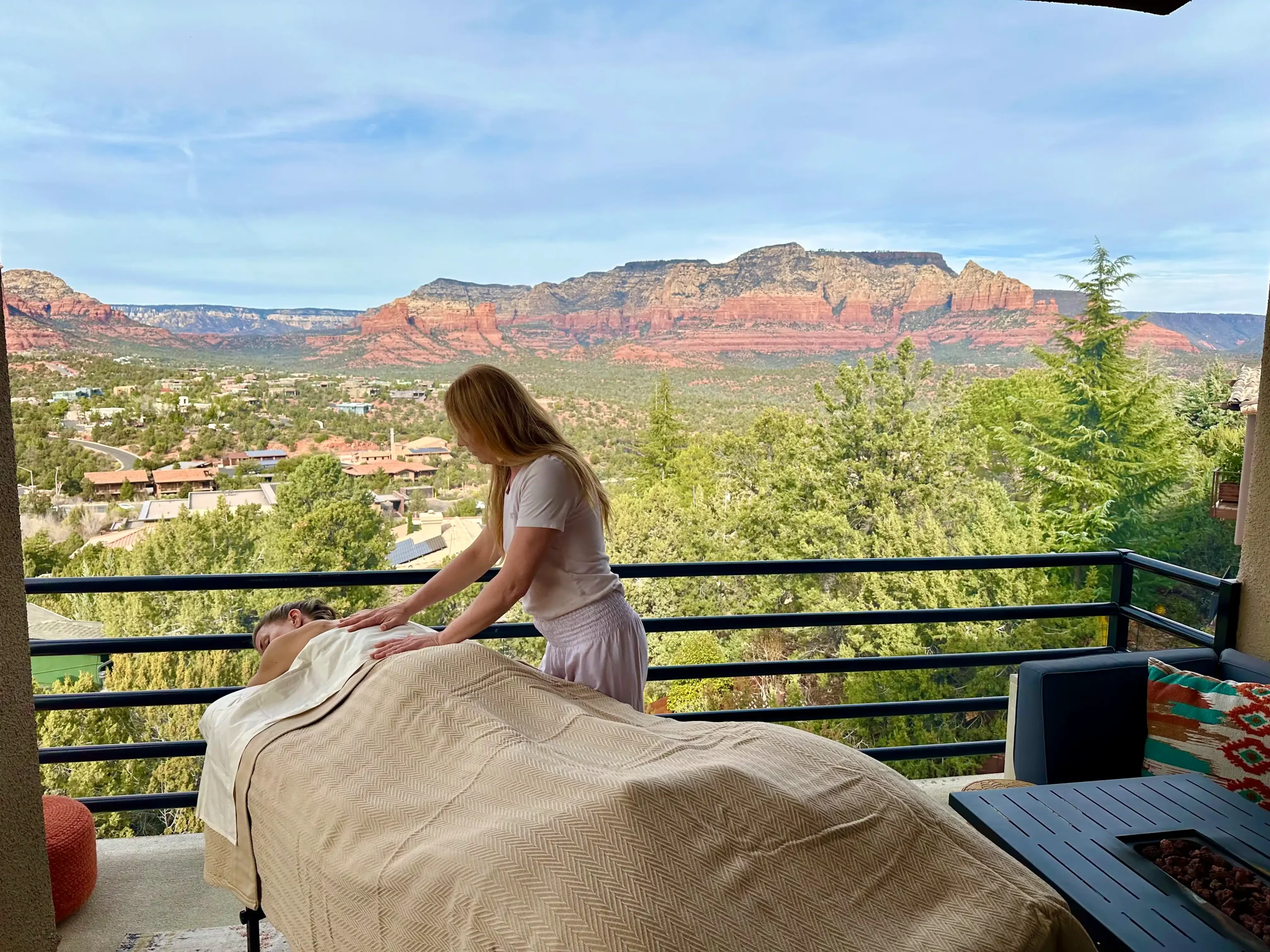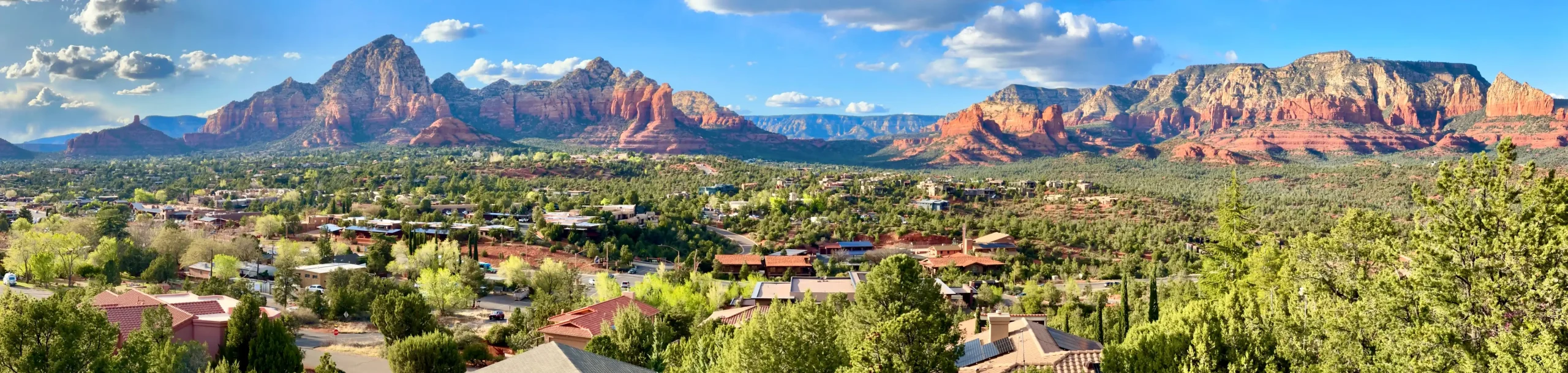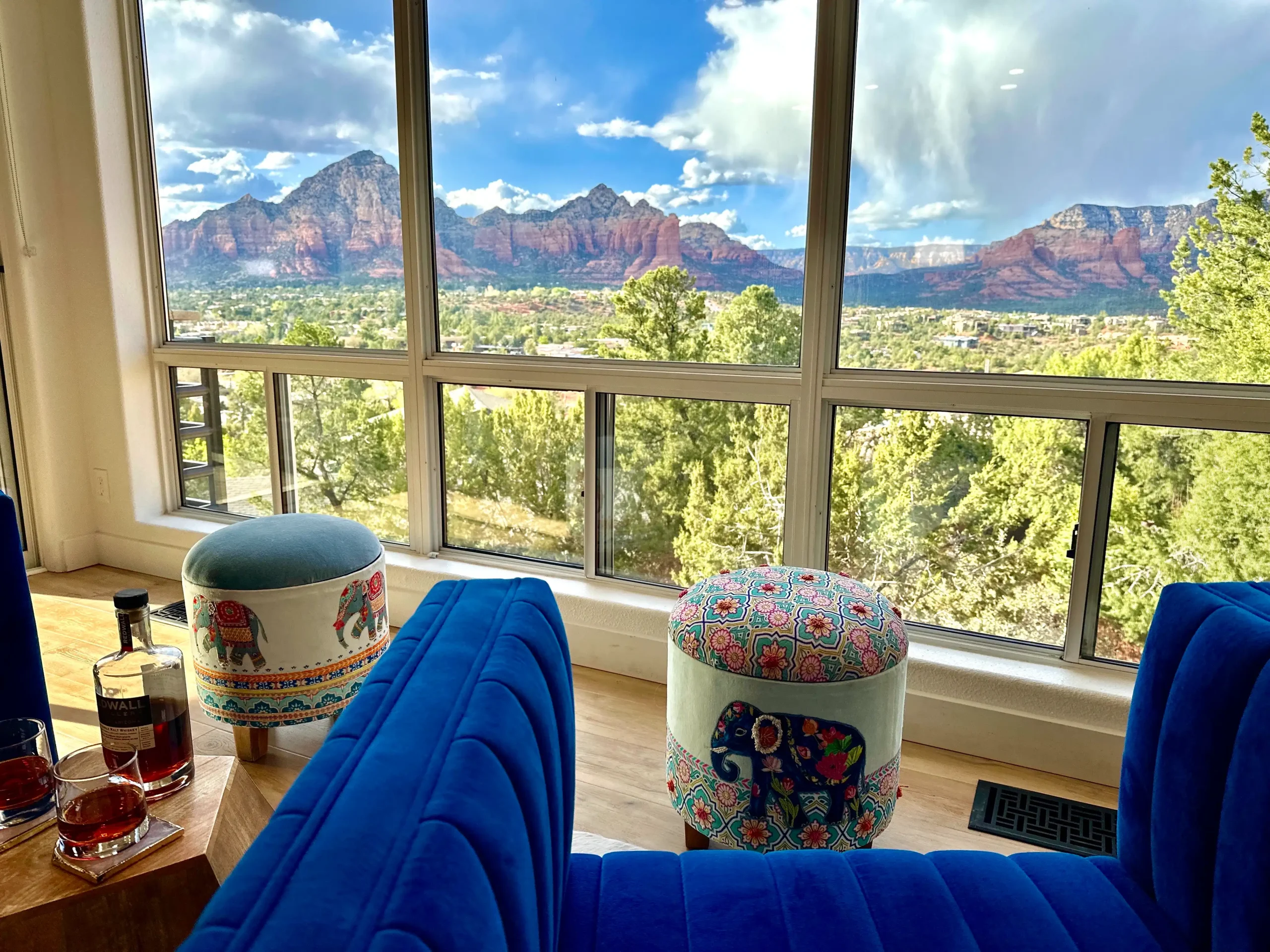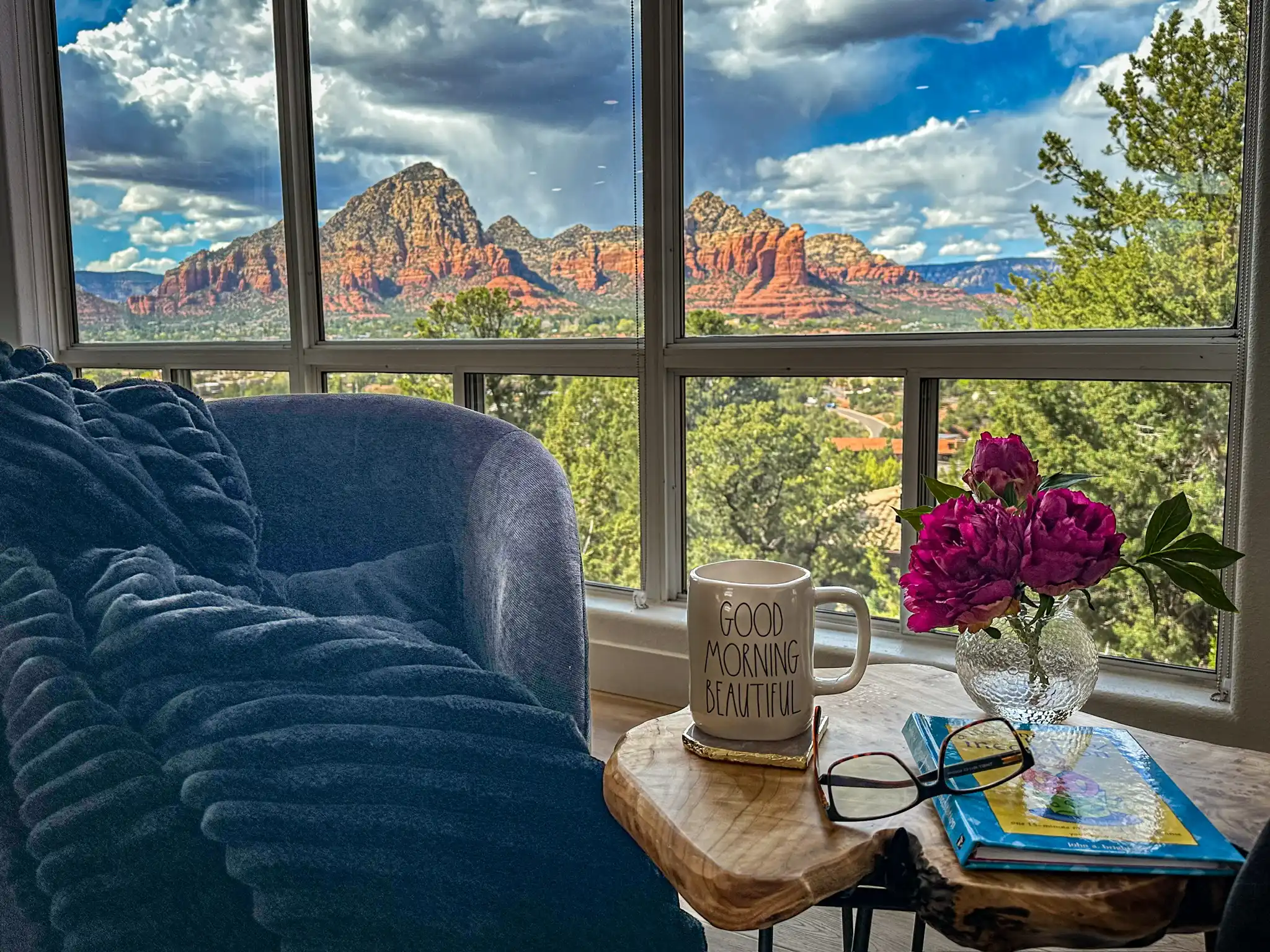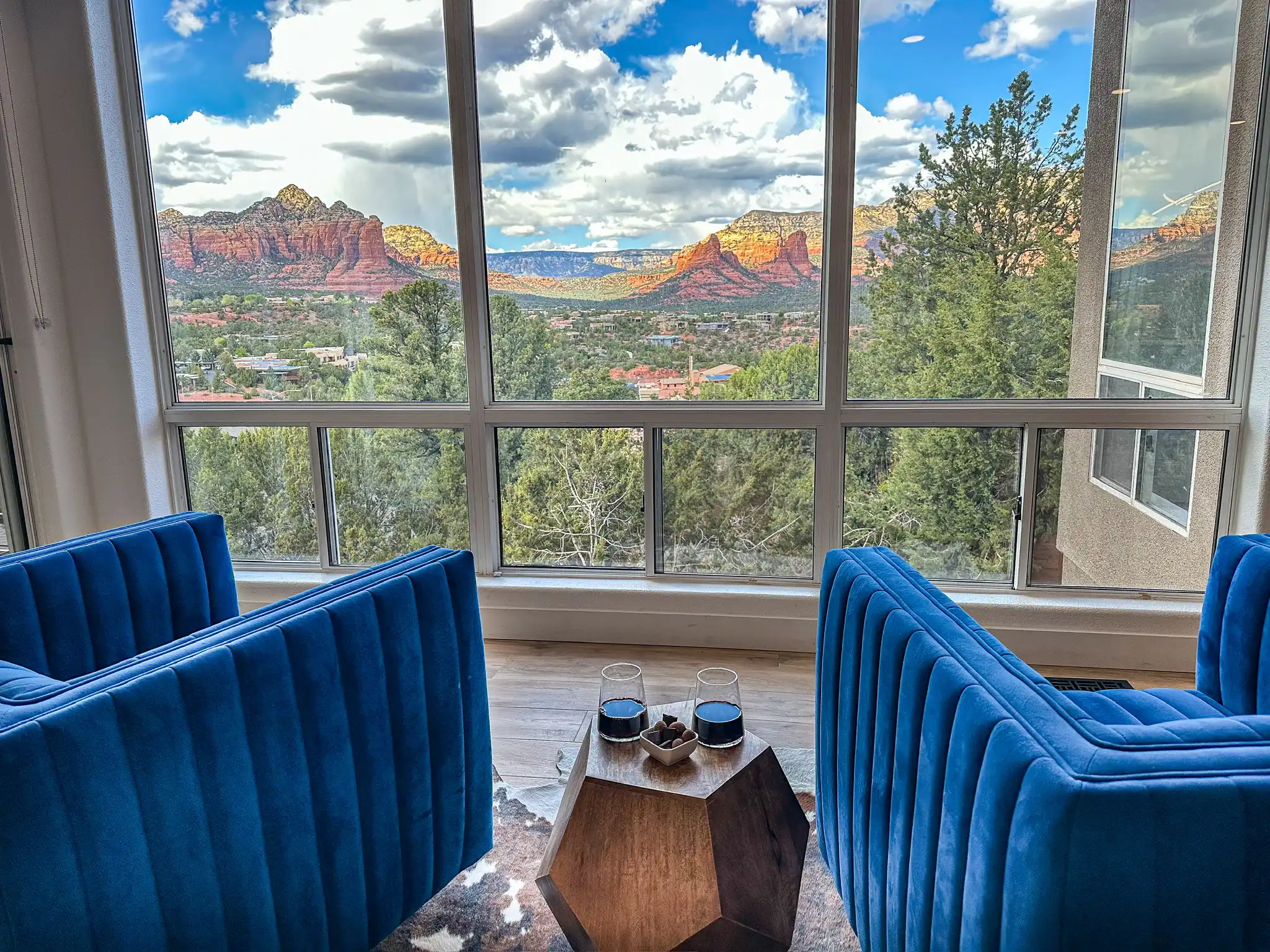
Picture yourself seated on ancient red sandstone as the first light of sunrise moves across Sedona’s red rock formations. The desert is quiet. Your breath slows. Meditation no longer feels like something you’re trying to accomplish—it becomes something you’re entering.
Meditation in Sedona is different from practicing indoors or in temporary travel spaces. Hotel rooms, studios, and borrowed corners often require effort just to settle the mind. In contrast, the red rock landscape naturally supports stillness. Space opens. Sensory awareness sharpens. Attention stabilizes with less force.
Place matters more than we often acknowledge. The nervous system responds to light, sound, texture, and scale long before thought intervenes. When meditation happens in nature—especially in a geologically ancient environment like Sedona—those elements work together to create conditions that calm the body and focus the mind. Instead of practicing meditation against your surroundings, you practice with them.
Sedona’s red rocks offer an environment uniquely suited to morning meditation. As sunrise transforms stone through color and warmth, the landscape becomes an active participant in the practice. Grounding happens through physical contact. Breath synchronizes with expanding light. Awareness settles into the present moment with surprising ease.
The five approaches below explore how meditation in Sedona shifts a familiar morning ritual into something deeper and more embodied—from grounding meditation on stone to breathwork, walking meditation, sound awareness, and visualization shaped by light. Each practice is simple, accessible, and rooted in direct experience, allowing the landscape itself to become your teacher.
Why it matters: Grounding meditation becomes more effective when the body has direct contact with the earth. In Sedona, ancient red rock replaces visualization with physical certainty—the landscape does the anchoring for you.
Grounding meditation is often taught through imagery, such as visualizing roots extending into the earth. While useful, these techniques rely on mental effort. Meditation in Sedona’s red rock formations offers a more embodied approach. Sitting directly on stone that has weathered millions of years of elemental change creates grounding through sensation rather than imagination.
Sedona’s sandstone provides firmness, texture, and temperature variation—three sensory inputs that naturally draw attention into the present moment. The solidity of the rock encourages an upright spine, while its surface offers constant tactile feedback.
This sensory stability allows the nervous system to settle more quickly. When the body feels supported and secure, attention no longer needs to search for grounding—it’s already there.
Cathedral Rock is especially supportive for grounding meditation at sunrise. Arrive about thirty minutes before the sun appears and choose a stable, exposed section of stone.
Begin by noticing:
Instead of imagining connection, recognize the connection that already exists. You are seated on the earth.
As the sun rises, the stone beneath you slowly warms. This physical shift—from cool to warm, dark to illuminated—naturally holds attention without effort. Meditation becomes an act of witnessing transformation rather than achieving a state.
Comfort allows the body to relax—and when the body relaxes, awareness deepens.
Why it matters: Sunrise breathwork aligns breath, light, and awareness. Practiced in Sedona, this alignment happens effortlessly because the environment supports rhythmic attention.
Breathwork is one of the most direct ways to stabilize attention. When paired with sunrise in Sedona’s red rock landscape, it becomes especially powerful—not through intensity, but through simplicity.
Before sunrise, visual input is minimal. This naturally heightens awareness of internal rhythms, especially the breath. As light gradually enters the landscape, awareness expands without fragmenting.
Bell Rock’s eastern-facing formations provide ideal conditions for this practice.
Arrive at least twenty minutes before sunrise and settle into a comfortable seated position.
The counting isn’t meant to control the breath—only to anchor attention.
As the first light appears, continue the same breath rhythm while adding visual awareness of the changing landscape. You are not synchronizing breath to light; you are allowing both rhythms to coexist in awareness.
This dual focus—breath and light—naturally quiets mental chatter and creates coherence.
Why it matters: Walking meditation becomes deeper when the environment removes visual and spatial constraints. Sedona’s open landscapes allow movement without mental interruption.
Walking meditation is often practiced in small, confined spaces. Airport Mesa offers something rare: panoramic trails where the gaze can extend for miles, freeing attention from constant navigation.
Wide trails and expansive views reduce cognitive load. There’s less need to watch where you’re going, allowing awareness to rest fully in movement and breath.
Begin by standing still at the trailhead and feeling:
As you walk, allow breath and steps to find their own rhythm. No counting is required—just noticing their natural synchronization.
As you continue walking, mental noise gradually softens. The body settles into rhythm. Attention shifts from thought to sensation. You may notice moments where you’ve been fully present without realizing it—that recognition is the practice working.
This is meditation with movement, not exercise.
Why it matters: Sound meditation is often easier than breath-based practices because it works with external focus. Sedona’s red rocks create natural acoustic environments that deepen listening.
Stone surfaces reflect and extend sound, transforming ordinary noises into layered experiences. This makes Sedona especially well-suited for sound-based meditation.
Bird calls echo. Wind moves in waves. Even silence has texture. These acoustic qualities lengthen moments of perception, allowing attention to rest without effort.
Find a quiet alcove or rock overhang and remain still.
Let awareness move through three stages:
There is no need to judge or interpret—just notice sound arising and fading.
Echoes extend sonic moments, allowing awareness to stay with a single sound longer. This naturally strengthens concentration without technique or control.
Why it matters: Visualization meditation works best with real, changing imagery. Sedona’s red rocks provide a living visual field that holds attention effortlessly.
Instead of imagining colors, you witness them directly as light transforms stone during sunrise.
This progression offers a perfect visual anchor for meditation.
Choose one formation—Cathedral Rock works beautifully—and commit to watching it without shifting focus.
The practice is simple:
Recognizing color is quick: “That rock is red.”
Seeing color is sustained: noticing shade, movement, and light moment by moment.
This shift—from labeling to perceiving—is the essence of meditation.
This is open-eye meditation, training awareness to remain steady within visual experience.
Yes. Meditation in Sedona is especially accessible for beginners because the natural environment supports focus and presence. The sensory richness of the red rocks, open space, and sunrise light makes it easier to stay engaged without relying heavily on technique.
No. None of the practices described require belief in vortexes or spiritual frameworks. They are based on sensory awareness, nervous system regulation, and attention supported by the natural environment.
Early morning, particularly around sunrise, offers the most supportive conditions. Cooler temperatures, softer light, minimal crowds, and natural circadian alignment make morning meditation especially effective.
Popular and supportive locations include Cathedral Rock for grounding meditation, Bell Rock for sunrise breathwork, and Airport Mesa for walking meditation. Quiet alcoves and trails throughout the red rock area also offer excellent conditions.
Yes. Many meditation spots in Sedona are accessible with minimal walking. Choosing stable, easily reached formations allows you to focus on meditation rather than physical exertion.
Even 15–20 minutes can be meaningful. However, practices involving sunrise light or color transformation often benefit from 30–45 minutes of stillness to allow the experience to unfold naturally.
The core practice is the same, but the experience often feels different. Natural light, open space, and geological features reduce sensory strain and mental effort, making meditation feel more embodied and less forced.
Bring layered clothing, a small cushion or folded blanket, water or warm tea, and minimal gear. Comfort and simplicity support deeper presence.
Yes. While Sedona offers ideal conditions, the same techniques can be adapted to other natural environments. Time spent meditating in Sedona often helps practitioners develop skills they can carry into everyday practice elsewhere.